Calculator Design Apps: Streamlining Workflows with Smart Calculation Tools
In the modern digital landscape, efficiency is not merely a preference but a necessity. Whether you are a freelancer managing client invoices, an educator preparing lesson materials, or an entrepreneur analyzing market trends, the ability to process numerical data quickly and accurately is fundamental to success. This is where Calculator Design Apps come into play. These applications are no longer simple arithmetic tools; they have evolved into comprehensive suites that integrate scanning technology, unit conversion, currency exchange tracking, and cognitive training into a single, cohesive interface. Understanding how to leverage these advanced features can significantly enhance your daily workflow, reducing friction in tasks that require precision and speed.
Integrating Smart Calculation into Professional Workflows
The traditional calculator has long been a staple of office supplies, but its digital counterpart offers capabilities that extend far beyond basic addition and subtraction. When we discuss Calculator Design Apps, we are referring to software solutions designed with user experience at the forefront. These apps are built to fit seamlessly into various stages of a project lifecycle. For instance, during the planning phase of a construction or design project, accurate unit conversions are critical. A miscalculation in converting meters to feet or kilograms to pounds can lead to costly errors in material procurement. By utilizing an application equipped with an automatic conversion feature, professionals can ensure consistency across all measurements without the mental load of manual calculation.
Moreover, the integration of these tools into broader business processes allows for better resource management. Consider a marketing agency working with international clients. The need to switch between local currencies and global standards is frequent. An app that provides real-time exchange rate checks enables marketers to provide accurate quotes and budget forecasts instantly. This immediacy reduces the turnaround time for proposals and enhances professional credibility. The key lies in recognizing that calculation is not an isolated task but a component of a larger decision-making process. By embedding smart calculation tools into your routine, you create a more responsive and agile workflow.
The Power of Question Scanner Technology
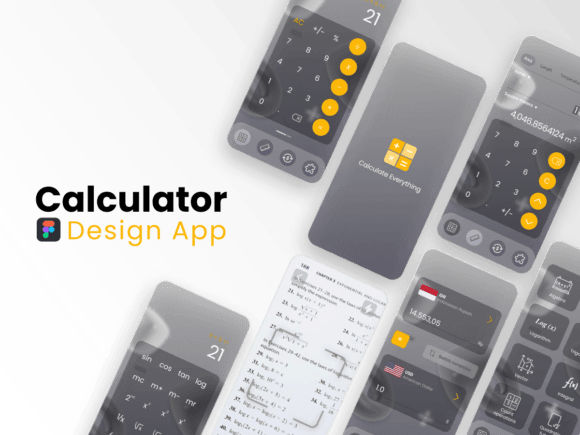
One of the most transformative features found in modern Calculator Design Apps is the question scanner. This functionality leverages optical character recognition (OCR) and artificial intelligence to interpret handwritten or printed mathematical problems. For educators and students, this feature is invaluable. It allows for the rapid verification of complex equations, freeing up time for conceptual understanding rather than tedious computation. However, its utility extends beyond the classroom. Professionals dealing with legacy documents, handwritten notes, or whiteboard brainstorming sessions can use the scanner to digitize and solve equations on the fly.
The implementation of this feature requires a degree of preparation to maximize efficiency. Users should ensure that lighting conditions are optimal when scanning to avoid recognition errors. Furthermore, understanding the scope of the scanner’s capabilities—whether it handles algebraic expressions, calculus, or statistical formulas—helps in setting realistic expectations. When integrated correctly, the question scanner acts as a bridge between physical inputs and digital outputs, streamlining the transition from idea to execution. This reduces the friction often associated with transcribing data manually, thereby minimizing the risk of human error.
Global Connectivity Through Currency Exchange Features
In an increasingly interconnected economy, the ability to monitor and convert currencies in real time is a crucial skill for businesses and travelers alike. Calculator Design Apps that include comprehensive exchange rate screens provide users with up-to-date financial data, allowing for informed decision-making. For e-commerce owners, this means adjusting pricing strategies dynamically based on fluctuating currency values. For freelancers, it ensures that international payments are evaluated accurately against local living costs.
To effectively utilize this feature, it is important to understand the difference between mid-market rates and the rates offered by financial institutions. Most apps provide the mid-market rate, which serves as a benchmark. Users should factor in transaction fees and spreads when making final calculations. By keeping the exchange rate screen accessible during negotiations or purchasing processes, individuals can maintain greater control over their financial outcomes. This level of transparency fosters trust and accuracy in international transactions, which is essential for maintaining healthy business relationships.
Enhancing Cognitive Skills with Integrated Puzzles
While efficiency is paramount, maintaining cognitive sharpness is equally important for long-term productivity. Many advanced calculator applications now include puzzle modules designed to hone math skills. These gamified elements serve as mental exercises that keep the brain engaged and improve numerical fluency. For professionals who rely heavily on quantitative analysis, regular engagement with these puzzles can enhance mental agility and problem-solving speed.
Incorporating these puzzles into daily routines can be seen as a form of professional development. Just as athletes train their bodies, knowledge workers must train their minds. Spending a few minutes each day solving mathematical challenges can improve focus and reduce mental fatigue during high-stakes tasks. This feature transforms the calculator from a passive tool into an active partner in cognitive maintenance, offering a holistic approach to productivity that balances output with mental well-being.
Design Integrity and Usability in Figma
The effectiveness of any software tool is heavily influenced by its design. Calculator Design Apps that are developed with a focus on usability ensure that users can navigate complex features with ease. For designers and developers looking to customize or build upon existing templates, the availability of well-organized Figma files is a significant advantage. A Figma file with neatly organized groups and layers allows for efficient editing and customization. This structure ensures that changes made to one part of the interface do not inadvertently disrupt other elements, maintaining consistency throughout the design.
When working with online website editors like Figma, attention to detail in layer organization is crucial. Designers should utilize clear naming conventions and component structures to facilitate collaboration. The use of Google fonts, as commonly included in these design kits, ensures typographic consistency and readability across different devices and platforms. This attention to typographic detail enhances the overall user experience, making the app not only functional but also visually appealing. For teams, this means faster iteration cycles and a higher quality final product, as the foundational design work is already structured for scalability and ease of use.
Practical Implementation Tips for Long-Term Use
To fully benefit from Calculator Design Apps, users should adopt a strategic approach to implementation. First, assess your specific needs. Do you require advanced scientific functions, or is your primary focus on unit conversion and currency exchange? Identifying your core requirements will help you select the right features to prioritize in your daily workflow. Second, invest time in learning the shortcuts and advanced functionalities of the app. Many users underutilize these tools because they stick to basic operations. Exploring features like the question scanner or puzzle mode can reveal new ways to enhance productivity.
Third, ensure compatibility with your existing tech stack. If you are using the app on multiple devices, verify that data syncs seamlessly across platforms. This consistency is vital for maintaining continuity in your work. Finally, consider the long-term maintenance of your tools. Regularly update the app to access new features and security patches. By treating your calculator app as a dynamic component of your digital toolkit, you can ensure it continues to serve your evolving needs effectively.
In conclusion, Calculator Design Apps represent a significant leap forward in how we interact with numerical data. By combining traditional calculation capabilities with advanced features like question scanning, unit conversion, currency exchange, and cognitive training, these applications offer a comprehensive solution for modern professionals. Whether you are designing a new interface in Figma, managing international finances, or simply looking to sharpen your math skills, integrating these tools into your workflow can lead to greater efficiency, accuracy, and mental clarity. The key to success lies in understanding the full potential of these features and implementing them strategically within your daily routines.